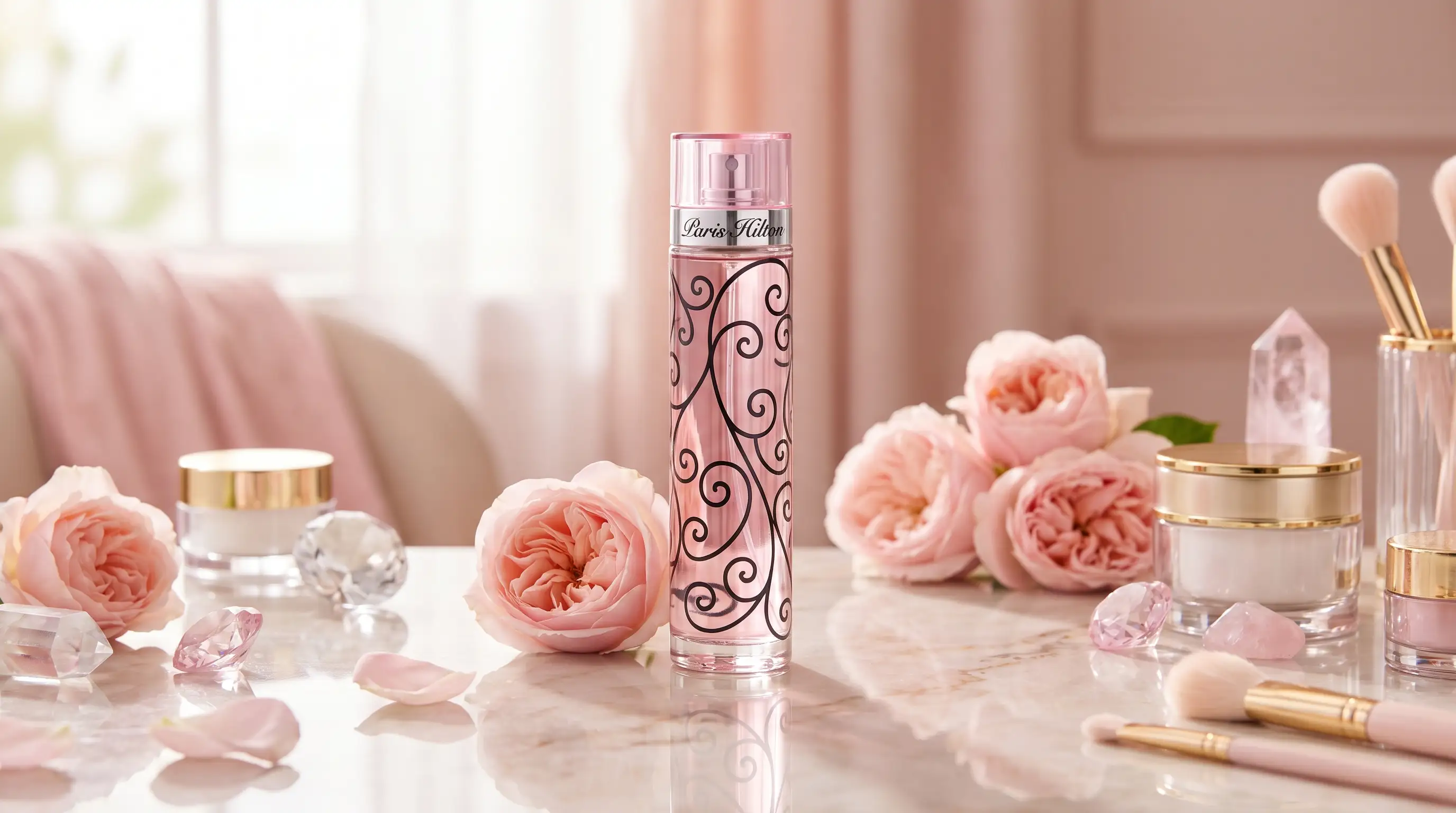
I bought my first bottle of this not because I read a review, but because I remembered the smell from somewhere — a hallway, a friend's bathroom counter, a memory I couldn't quite place. That's the strange thing about this fragrance. Almost nobody buys it cold. Nearly everyone who wears it has some prior association with it, which makes reviewing it fairly a little more complicated than reviewing a fragrance nobody's ever smelled before.
If you're here trying to decide whether to blind-buy it, or whether the bottle in the drugstore today is even the same juice you remember from 2007, this guide covers what actually matters: the real composition, why quality can vary between bottles, current pricing across the US, UK, and Canada, and which similar fragrances are worth considering if this one isn't quite right for you.
The Story Behind the Bottle
Released in 2005 through a licensing deal with American fragrance manufacturer Parlux, this was never positioned as a niche or prestige release. It was built for a moment — the exact point where reality television, tabloid culture, and mass-market beauty collided, and where a famous name alone could sell a bottle faster than any perfumer's pedigree could.
It's worth understanding upfront that this is a licensed fragrance, not one crafted in-house by a personal atelier. Paris Hilton's company signed a formal licensing agreement with Parlux in January 2005, giving Parlux the rights to manufacture, distribute, and sell fragrances under her name, while she approved the concept, naming, and packaging direction. This is the standard structure for nearly every celebrity fragrance on the market — and it matters more than most reviews admit, for reasons we'll get to below.
Notes Breakdown: What's Actually in the Bottle
Top Notes: Melon, apple, peach (some retail listings note a lighter, ozonic-leaning opening depending on batch) Heart Notes: Freesia, mimosa, jasmine, lily-of-the-valley, lily, tuberose Base Notes: Musk, ylang-ylang, sandalwood, oakmoss
The character is unmistakably mid-2000s American mall fragrance — bright, sweet, and deliberately unserious. It wasn't designed to reward a slow, contemplative sniff. It was designed to be recognized instantly, the kind of scent that makes someone in an elevator think I know that smell before they've placed where from.
Some long-term wearers describe a faint skin-musk quality underneath the florals that doesn't show up on the printed notes list — a detail that suggests the formula leans on body heat for its best performance rather than reading strongest straight out of the bottle.
What Most Reviews Leave Out
Most write-ups of this fragrance repeat the same notes list and stop there. Two things matter far more to an actual buying decision, and almost nobody mentions them.
Why Bottles Can Vary Between Retailers
Because this is a licensed product manufactured under contract rather than produced in a single controlled facility, production has moved across different manufacturing partners and suppliers over its two-decade run. A meaningful share of Parlux's fragrance sales during this era came through related-party distributors and wholesale partners rather than a single tightly controlled supply chain. In practice, this means the "cheap bottle, expensive bottle" inconsistency some buyers report — where one bottle from one retailer seems noticeably weaker than another — usually traces back to which manufacturing run and distribution channel it came through, not a flaw in the buyer's nose.
Why It Doesn't Smell Like It Used To
This complaint shows up constantly, and it isn't nostalgia talking. Fragrances launched under the looser ingredient regulations of the mid-2000s have had two decades of IFRA restrictions tighten around them since. Certain citrus oils and aldehydes that once gave fragrances a rich, rounded opening have been restricted or reformulated, typically resulting in brighter but thinner top notes that fade faster. Some traditional musks and heavier base materials have also been swapped for modern aromachemicals like Ambroxan, Iso E Super, and Cashmeran — materials that rebuild volume and diffusion but don't carry quite the same density as the originals. For a fragrance this old, that kind of quiet reformulation is close to unavoidable, and it explains far more of the "this isn't the same bottle" feeling than any single retailer doing something wrong.
A Quiet Third Factor: Counterfeit Risk
Fragrances with this kind of production scale — nearly two decades on shelves, dozens of near-identical pink-and-black packaging variants across more than 30 flanker releases, and heavy distribution through discount channels — are also among the most commonly counterfeited on third-party marketplaces. If a bottle bought from an unverified seller performs weakly or smells noticeably off compared to what you remember, that's statistically a more likely explanation than a formula change.
Who This Fragrance Is Actually For
This isn't a fragrance tied to a specific occasion so much as a specific stage of life. It suits someone — often a teenager or a woman in her twenties — discovering fragrance as a form of identity rather than sophistication. It reads as light even at Eau de Parfum strength: safe rather than daring, and especially approachable for someone just starting to build a fragrance collection. It performs best as a warm-weather, daytime scent — fresh enough for a classroom or an air-conditioned office, sweet enough to feel friendly rather than commanding.
It's not built for a heavy, room-filling presence, and it won't cling to fabric for days the way a dense amber or oud composition might. That's not really a flaw — it's simply outside what this fragrance was ever trying to do. If your frame of reference is dense, long-lasting Middle Eastern-style perfumery, this will likely feel pleasant but noticeably lighter by comparison — a scent meant to be noticed up close, not one built to fill a room.
Pricing Across the US, UK, and Canada
Because this fragrance moves almost entirely through discount and drugstore channels rather than controlled luxury retail, listed prices and actual shelf prices can differ by 40–70%, and both shift constantly depending on the retailer.
Size | USA (USD) | UK (GBP) | Canada (CAD) |
|---|---|---|---|
30ml / 1 oz | $12 – $25 | £10 – £20 | $18 – $32 |
50ml / 1.7 oz | $18 – $35 | £15 – £28 | $28 – $45 |
100ml / 3.4 oz | $25 – $55 (up to ~$70 at department stores) | £22 – £42 | $38 – $70 |
The line is produced in 30ml, 50ml, and 100ml Eau de Parfum sizes — there's no standard 200ml release for this particular fragrance. Discount fragrance retailers tend to sit at the lower end of these ranges, while department stores like Macy's price the same bottle noticeably higher. Gift sets that bundle the 100ml spray with body lotion and shower gel are common and often work out to better value than buying the perfume alone. UK and Canadian pricing generally tracks the US figures once currency conversion is factored in, with pharmacy chains like Boots and Superdrug typically undercutting department-store pricing the same way US discounters do.
Prices reflect typical listings as of mid-2026 and vary by retailer — check current listings before buying.
Similar Fragrances Worth Comparing
This fragrance sits in a small cluster of mid-2000s celebrity fruity-florals that drew from a very similar aromachemical palette and target audience:
Christina Aguilera Inspire — a close olfactory cousin, sweeter and more linear through the dry-down
Britney Spears Curious — the same fruity-floral bones, but leans more candy-sweet in the opening
Vera Wang Princess — a woodier, more gourmand take on the same "young and glamorous" brief, with a heavier vanilla base
Ariana Grande Cloud — the modern-day successor to this entire category, trading the fruity-floral formula for a creamy coconut-vanilla update aimed at a younger generation
If you want the same bright, approachable feeling but with more textural depth, stepping up to a niche or prestige tuberose-forward composition — one built with real sandalwood rather than a synthetic substitute — will get you closer to the original inspiration without the discount-market cost pressures affecting the formula.
The Final Word
This fragrance deserves to be judged as a cultural artifact first and a composition second. It was never trying to compete with Chanel or Guerlain — it was trying to be an affordable, recognizable bottle that an entire generation of young women could call their own, and by that measure, it succeeded on a scale that reshaped how the beauty industry approaches celebrity fragrance licensing. Buy it for nostalgia, as a first fragrance, or simply because you like bright fruity-florals — just buy it from a retailer you trust, since in this particular market, that precaution matters almost as much as the fragrance itself.
How long does it last on skin?
It's a lighter fragrance even at EDP concentration, so expect moderate longevity — a few hours of close-wear presence rather than all-day heavy projection. Reapplication during the day isn't unusual for this one.
How can I tell if a bottle is authentic?
Buy from established retailers rather than unverified third-party marketplace sellers. Given the scale of production and the number of similar-looking flanker bottles in this line, counterfeit risk is real — if a bottle performs unusually weakly or smells noticeably off, an unverified seller is a more likely explanation than a reformulation.
What's a good alternative if I want something similar but longer-lasting?
Christina Aguilera Inspire and Vera Wang Princess share a similar fruity-floral DNA with slightly different character. For more longevity and depth in the same general mood, a niche tuberose-forward fragrance with a real sandalwood base is worth exploring.