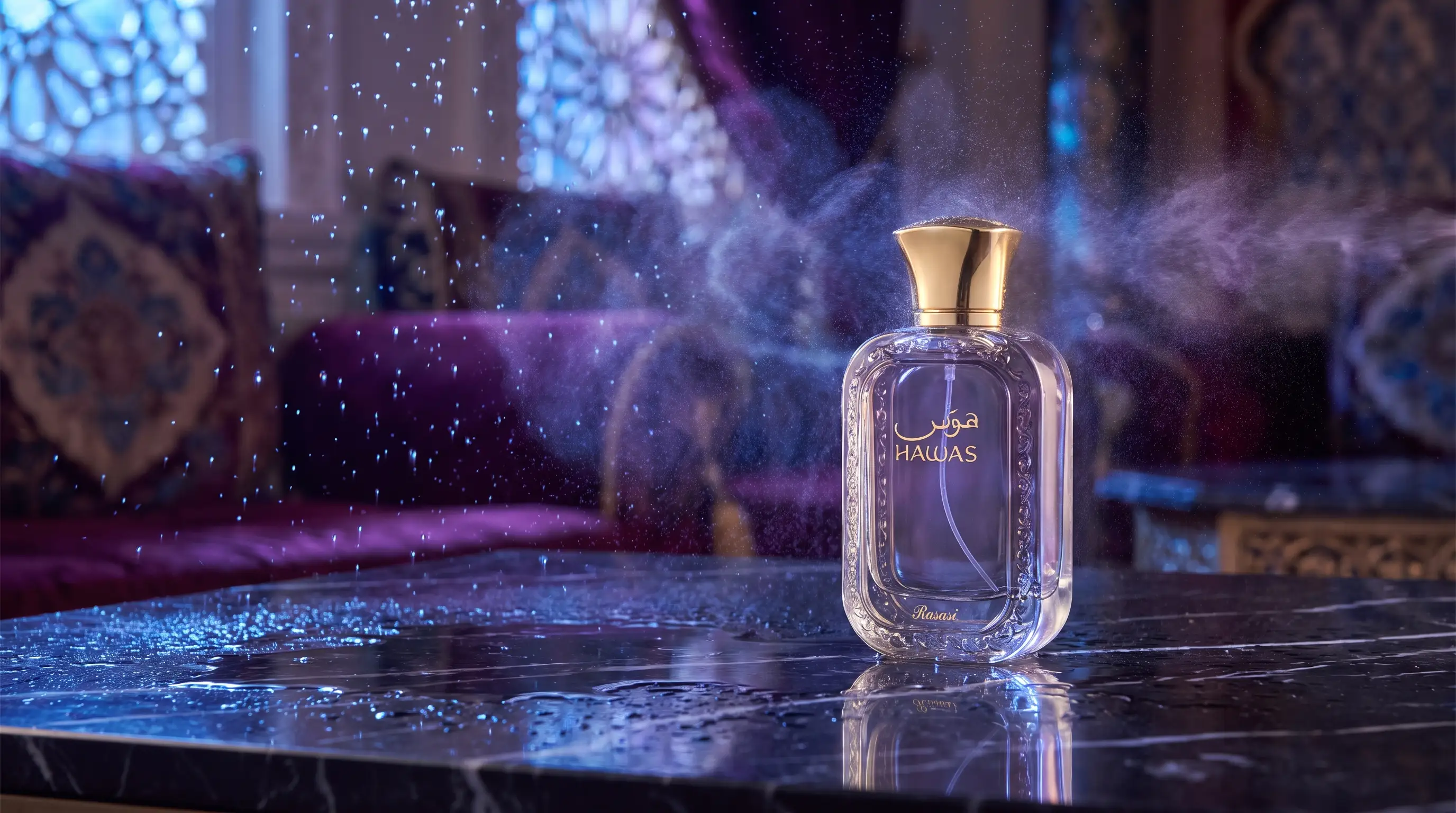
I almost didn't buy it. A $30 bottle sitting next to $150 designer names always makes you suspicious — either it's a hidden gem, or there's a reason it's cheap. With Hawas, I've come to think it's neither. It's something rarer: a fragrance that never tried to be luxury in the first place, and became a phenomenon anyway.
If you've landed here because someone mentioned Hawas in a fragrance group, or you've seen it recommended as "the best budget cologne nobody talks about enough," this guide covers everything you actually need before buying: what's really in the bottle, how it performs on skin over a full day, where the reviews disagree, and what it costs across the US, Canada, and the UK right now.
What Is Hawas by Rasasi?
Hawas — Arabic for passion — is a men's Eau de Parfum from Rasasi, a fragrance house founded in the UAE in 1991 by brothers Rakan and Ziad Rasasi. The name wasn't chosen for decoration. Everything about this fragrance, from its citrus-cinnamon opening to its ambergris-heavy base, is built to make an entrance rather than fade quietly into the background.
Most online retailers and fragrance databases list Hawas as a 2015 release. Rasasi's own company history tells a different story: the fragrance actually launched in 2007 and became the brand's breakthrough men's scent within the Gulf region, later winning recognition as one of the most popular perfumes in the Middle East at an industry event in Cannes in 2012. What most Western buyers are discovering as a "new TikTok find" is, in reality, a scent that had already dominated Gulf shelves for close to a decade before it reached wider international attention — the 2015 date most likely marks a repackaged export version, not the fragrance's actual birth.
A House Built on Inherited Craft
Rasasi wasn't a startup chasing a trend. The founding brothers came from a family of perfumers — their grandfather had built a reputation crafting custom scents for royal and elite clients. Based in the fragrance capital of the Gulf, Rasasi had direct access to raw materials and skilled perfumers most Western labels never see. That's part of why Hawas, despite being built on a Western aromatic-aquatic structure, doesn't quite smell like a Western fragrance. It's a Gulf sensibility wearing a familiar silhouette.
Hawas Notes Breakdown: What's Actually in the Bottle
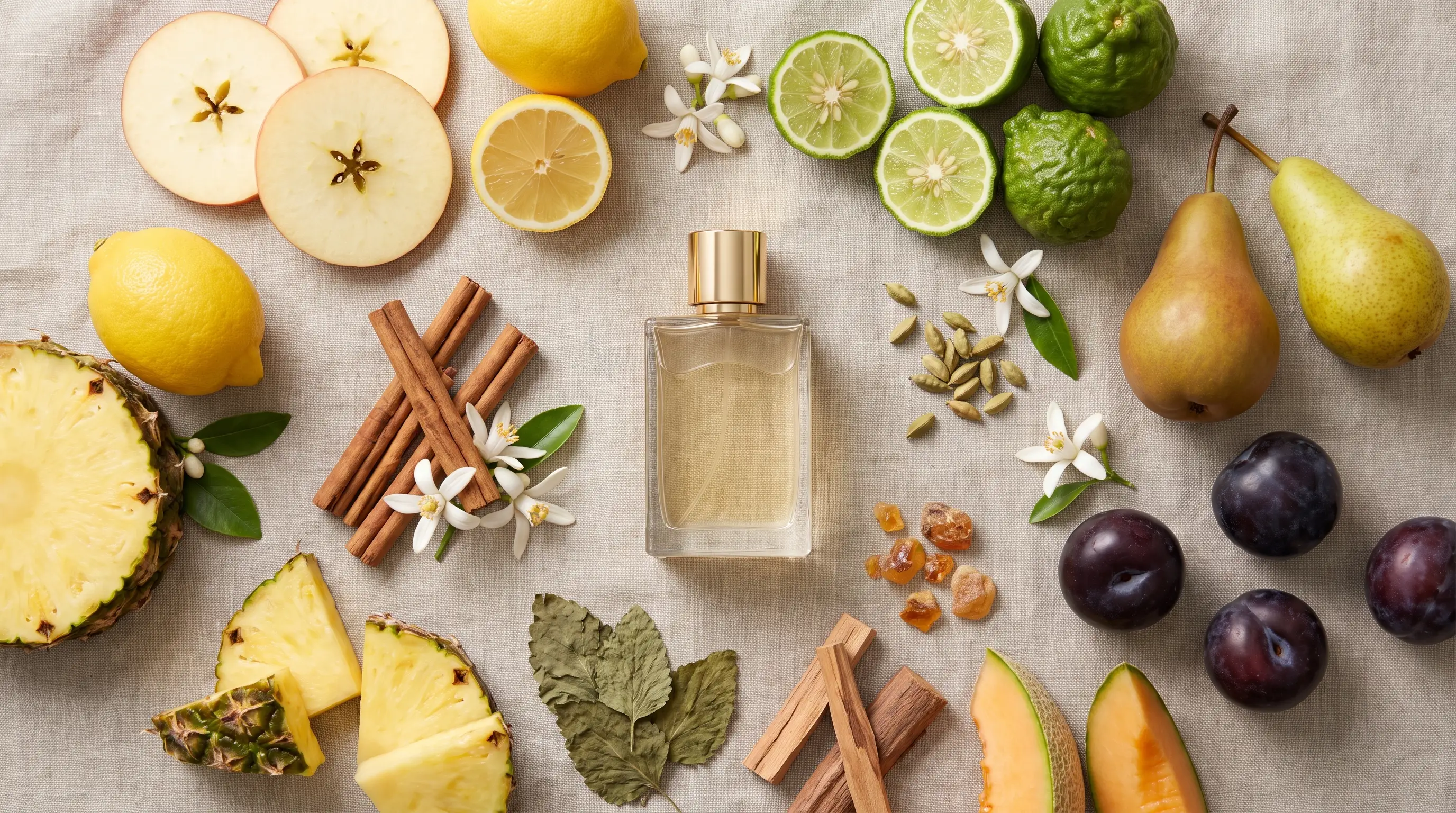
Most listings online simplify Hawas down to "apple, cinnamon, and musk." The full composition is more layered than that:
Top Notes: Apple, Bergamot, Lemon, Cinnamon, Pear, Pineapple Heart Notes: Orange Blossom, Cardamom, Plum, Melon, Violet Base Notes: Patchouli, Ambergris, Amberwood, Musk, Sandalwood, Cedarwood
How It Actually Wears, Stage by Stage
The Opening (0–30 minutes): Sharp citrus cut with warm cinnamon, softened almost immediately by candy-sweet apple and pear. This isn't the restrained citrus of a European cologne — it's built to fill a room before you've finished getting dressed. This is also the stage that divides opinion the most (more on that below).
The Heart (30 minutes–3 hours): An aquatic accord threaded with plum, cardamom, and orange blossom. This is where the fragrance smooths out — a noticeably more sophisticated, slightly gourmand transition from the loud opening.
The Dry-Down (3+ hours): Ambergris, musk, patchouli, and woods settle in. The ambergris brings a salty, slightly animalic warmth; the musk adds clean sensuality. This is the stage most wearers end up loving even if they didn't love the opening — and it's powered heavily by synthetic ambroxan, which is exactly why it lasts as long as it does.
Performance: 10-12 Hours, Consistently
If Hawas is famous for one thing, it's raw performance. Independent longevity testing consistently places it at 10 to 12 hours of wear on skin, with plenty of wearers reporting it lasting into the next day on clothing. This isn't exaggerated marketing — it's one of the most consistently repeated claims across fragrance communities, and it's the single biggest reason Hawas became a gateway fragrance for people discovering Western-style perfumery through a Gulf lens.
The Honest Debate: Synthetic Mess or Underrated Beast?
This is where a genuine review has to stop cheerleading. Hawas has a real, ongoing debate attached to it, and pretending otherwise would be dishonest.
The criticism: A recurring complaint in fragrance communities is that Hawas's power comes from blunt synthetic strength rather than refined blending. Some wearers describe the opening as an overwhelming, almost chemical burst of fruit that doesn't show any sign of careful, professional-level composition — more force than finesse. Others draw a direct lineage to Invictus and Nautica Voyage, suggesting Hawas leans closer to Invictus as it dries down, positioning it less as an original creation and more as a Gulf reinterpretation of a familiar aquatic template, executed at a much higher volume.
The defense: Just as many wearers report the opposite arc — disliking the opening on the first wear or two, then genuinely loving it by the third or fourth wearing, once the dry-down becomes the association rather than the initial blast. A common thread among long-term fans is that Hawas isn't meant to be judged on the first ten minutes at all.
Here's the honest read: what reads as a flaw through a strictly "Western fine fragrance" lens — loudness, synthetic muscle, excess — is treated as a virtue in Gulf fragrance culture, where the desert climate and social norms reward presence over subtlety. Hawas isn't failing to be a quiet, refined scent. It was never trying to be one.
Who Should Buy Hawas — and Who Should Skip It
Buy it if:
You want genuine 10+ hour performance without spending $150+
You like sweet-fruity openings that settle into a warm, musky, ambery dry-down
You're curious about Gulf/Middle Eastern-style perfumery as an entry point
You wear fragrance in cold-to-moderate climates where the projection has room to work
Skip it if:
You're sensitive to synthetic-forward openings (the first 20 minutes are genuinely polarizing)
You prefer subtle, close-to-skin fragrances for office or professional settings
You've tried Invictus or Nautica Voyage and didn't like them — Hawas shares real DNA with both
Similar Fragrances to Hawas
If the profile appeals to you but you want to compare before buying, these sit in the same general lane:
Paco Rabanne Invictus — the closest Western comparison, especially in the dry-down
Nautica Voyage — shares the aquatic-fruity opening structure at a lower price point
Rasasi Hawas Ice — a cooler, more aquatic-forward flanker of the original
Rasasi Hawas Black — a deeper, spicier reinterpretation for cooler weather
Hawas Flanker Line: Quick Comparison
Rasasi has built an entire family around the original. Here's how the most talked-about versions differ:
Version | Character | Best For |
|---|---|---|
Hawas (Original) | Fruity-citrus opening, ambery-musk dry-down | Year-round, especially spring/fall |
Hawas Ice | Cooler, more aquatic, lighter overall | Summer, hot climates |
Hawas Black | Deeper, spicier, less fruity upfront | Fall/winter, evening wear |
Hawas Fire | Warmer, more intense oriental direction | Cold weather, stronger presence |
If you're only buying one, the original remains the reference point every flanker is measured against.
Price Perspective — Hawas Across the US, Canada, and UK
Hawas was conceived and marketed almost entirely in one format: the 100ml Eau de Parfum. That's worth sitting with for a second, because it tells you something about the fragrance's intended identity. Brands that position a scent for careful, rationed use tend to offer travel sizes, 50ml decants, and oversized 200ml bottles for collectors. Hawas offers almost none of that. It wasn't built to be measured out — it was built to be used generously.
Here's what the market shows for the standard 100ml bottle:
Market | Typical Retail Range (100ml EDP) | Notes |
|---|---|---|
USA | ~$25 – $50 | Discount fragrance outlets sit near the low end; specialty perfume boutiques near the high end |
Canada | ~CAD $35 – $65 | Comparable to US pricing once currency conversion and import costs are factored in |
UK | ~£25 – £45 | Flankers like Hawas London (~£40) and Hawas Ice (~£30) sit in a similar band to the original |
Prices reflect typical listings as of mid-2026 and will shift by retailer — always check current listings before buying.
A couple of honest observations the numbers alone don't explain:
The price spread is unusually wide for one product. A $25 swing on a roughly $30 base price isn't typical for a designer-style fragrance. It reflects Hawas's positioning as a mass-distributed, multi-channel product rather than a tightly controlled luxury release — there's no single "correct" price the way there might be for a house that guards its distribution closely.
If you see a 50ml or 200ml bottle labeled "Hawas," check the exact name carefully. Unusual sizes are almost always a flanker (Ice, Black, Tropical) rather than the original formula, not a size variant of the classic.
Is Rasasi Hawas actually a 2015 release?
No — that's the commonly cited retail date, but Rasasi's own company history places the original launch in 2007, when it became the brand's breakthrough men's fragrance in the Gulf region. The 2015 date most likely reflects a repackaged version for export markets rather than the true release year.
How long does Hawas actually last?
Testing and wearer reports consistently place it at 10 to 12 hours on skin, with some wearers reporting all-day performance and lingering scent on clothing well beyond that.
Why does the color of the juice look different between bottles?
Rasasi has shifted some batches from the original deep purple toward a greyer tone to comply with international fragrance safety regulations around dye stability. Many long-term wearers report that these newer batches actually smell fresher and sharper than older, syrupy purple stock — the color has become an informal way collectors track which formulation era a bottle comes from.