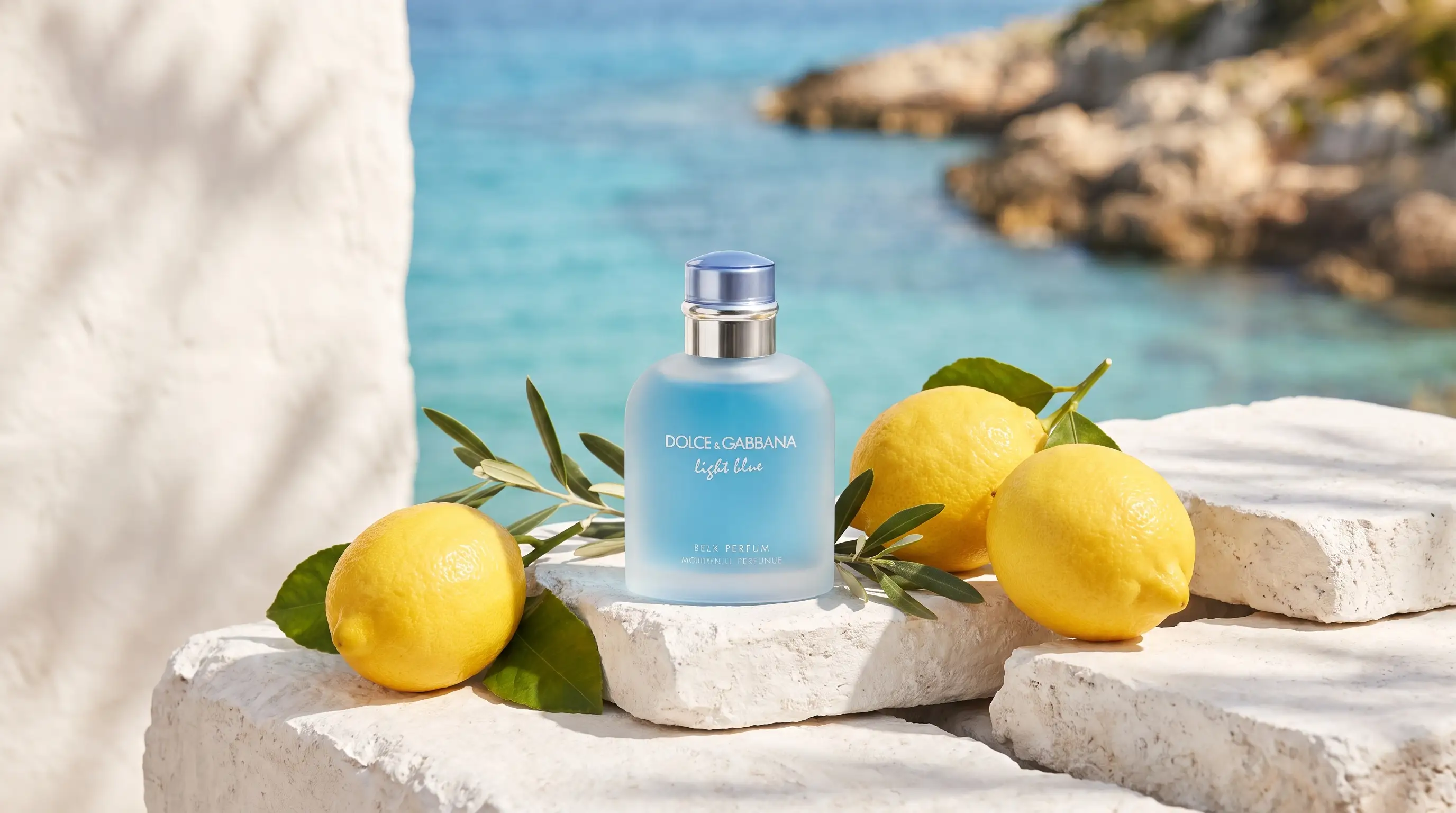
Some fragrances you choose. This one, most people remember choosing them. Ask anyone who wore it in the 2000s and they won't describe notes — they'll describe a summer, a person, a specific afternoon the lemon-and-musk combination somehow got tangled up with. That's rare for a mass-market fragrance, and it's exactly why so many people come back to Light Blue years later wondering if the bottle on the shelf today is even the same thing they remember.
Short answer: not entirely, and there's a real reason for that. This guide breaks down what's actually in Light Blue, why the newer versions genuinely smell different, what it costs across the US, UK, and Canada right now, and what to buy instead if you want the same mood with a different budget or personality.
The Story Behind the Bottle
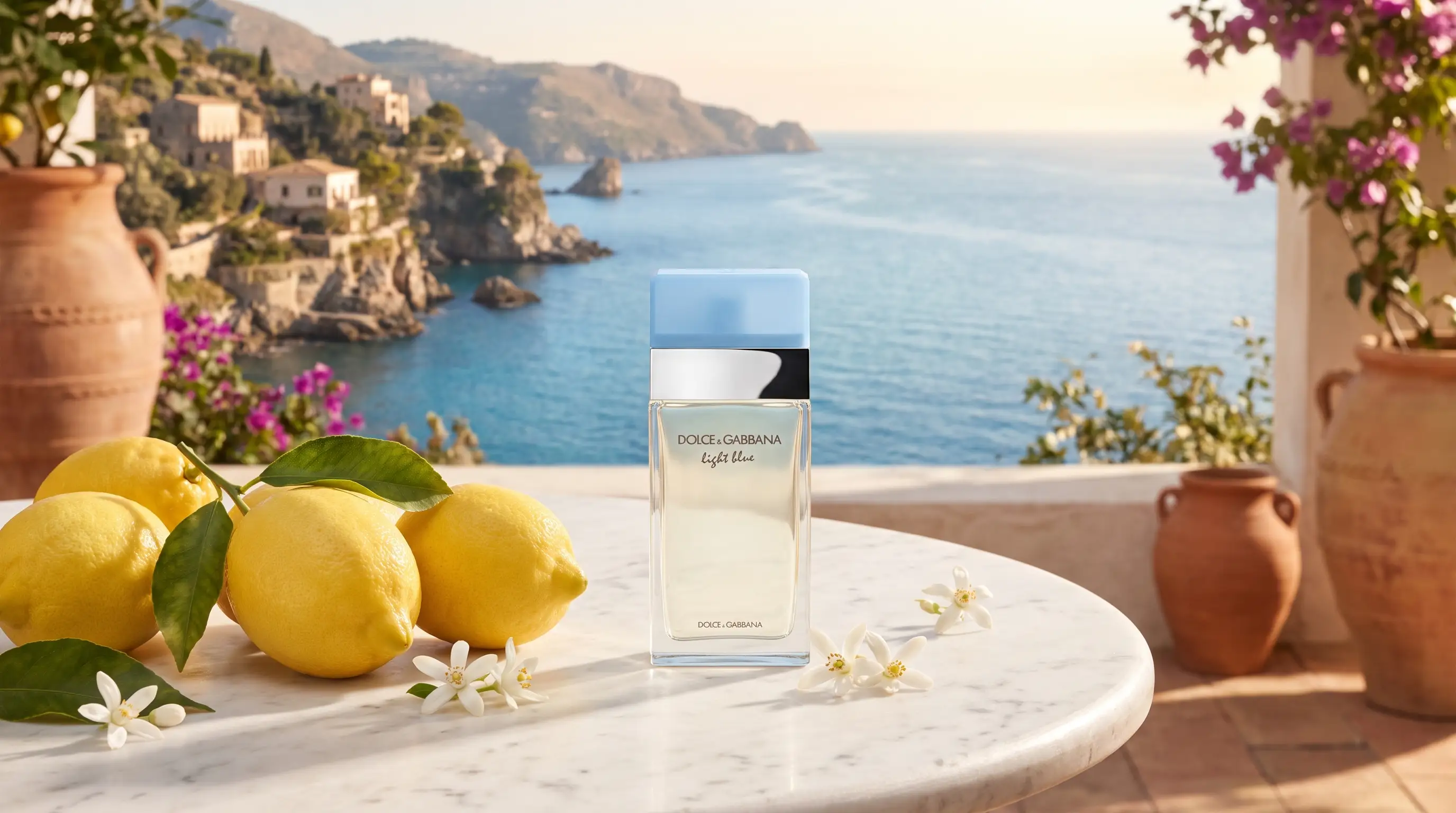
Dolce & Gabbana approached perfumer Olivier Cresp in 1999 with a brief that sounds more like a mood board than a formula request: bottle the feeling of Sicily. The process took over two years to get right, and Cresp has said publicly that the fragrance's lasting popularity comes down to one thing above all — a sense of luminosity and freshness he considered inseparable from the island itself.
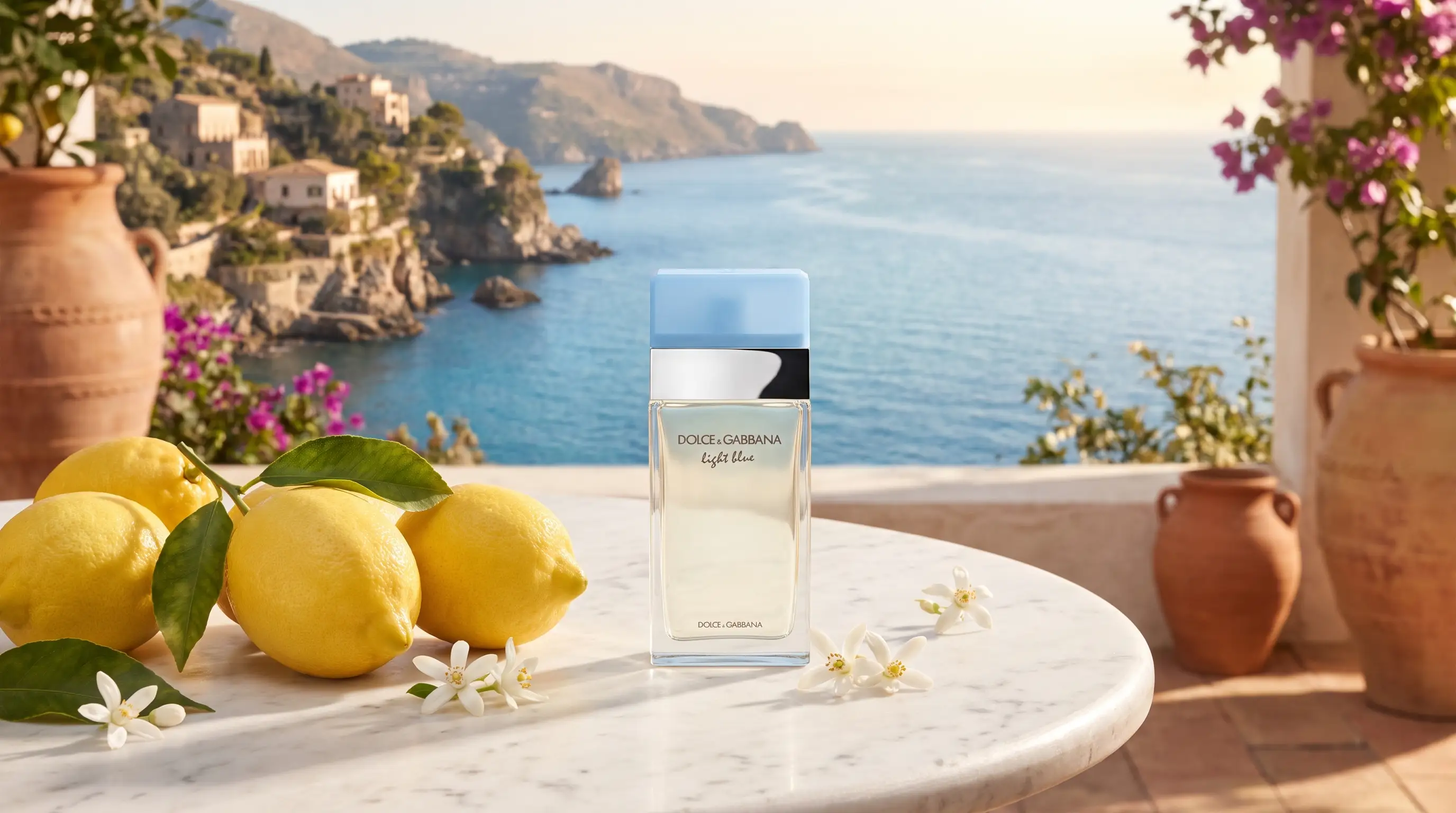
What launched in 2001 was deliberately simple. Cresp built the entire fragrance from around 25 ingredients, anchored by an unusually high concentration of Sicilian lemon essence — roughly 10%, far more than most citrus fragrances would use. That's not a timid lemon note borrowed from a supplier's catalogue. It's a lemon note the perfumer insisted on, and it's the reason the opening hits as hard as it does.
The Technical Side Most Reviews Skip
Underneath that lemon blast is a more interesting structure than the "citrus and that's it" reputation suggests. Cresp paired a tart green apple accord with a synthetic musk designed to mimic the warmth of human skin, then built the base around a trio of synthetic woods layered alongside natural cedar. This detail matters because it explains exactly how Light Blue behaves over the course of a wear: the lemon isn't simply fading — it's being handed off, deliberately, to a skin-like musk and woody base engineered to make the fragrance feel like it belongs to your own chemistry rather than sitting on top of it.
Notes Breakdown (Original Eau de Toilette)
Top Notes: Sicilian lemon, apple, cedar, bellflower Heart Notes: Bamboo, jasmine, white rose Base Notes: Cedarwood, musk, amber
The result is bright and citrus-forward at first spray, softening into something cleaner and more skin-like within the first hour — a fragrance built for daylight and warmth rather than evening depth.
An Industry Footnote Worth Knowing
Here's a small but genuinely interesting detail that rarely makes it into consumer reviews. Ambroxan — the synthetic amber-woody molecule that anchors the base of Light Blue and a huge share of modern perfumery — isn't actually a free, generic ingredient name the way most people assume. The Japanese chemical company Kao holds a registered trademark on the name "Ambroxan," and considers the correct generic term to be "Ambroxide." Nearly every fragrance description online, including ones for Light Blue itself, uses "ambroxan" casually as if it were public property. It's a minor point, but it says something about how little most fragrance marketing actually explains about the chemistry it's selling.
The Reformulation Story Nobody Warns You About
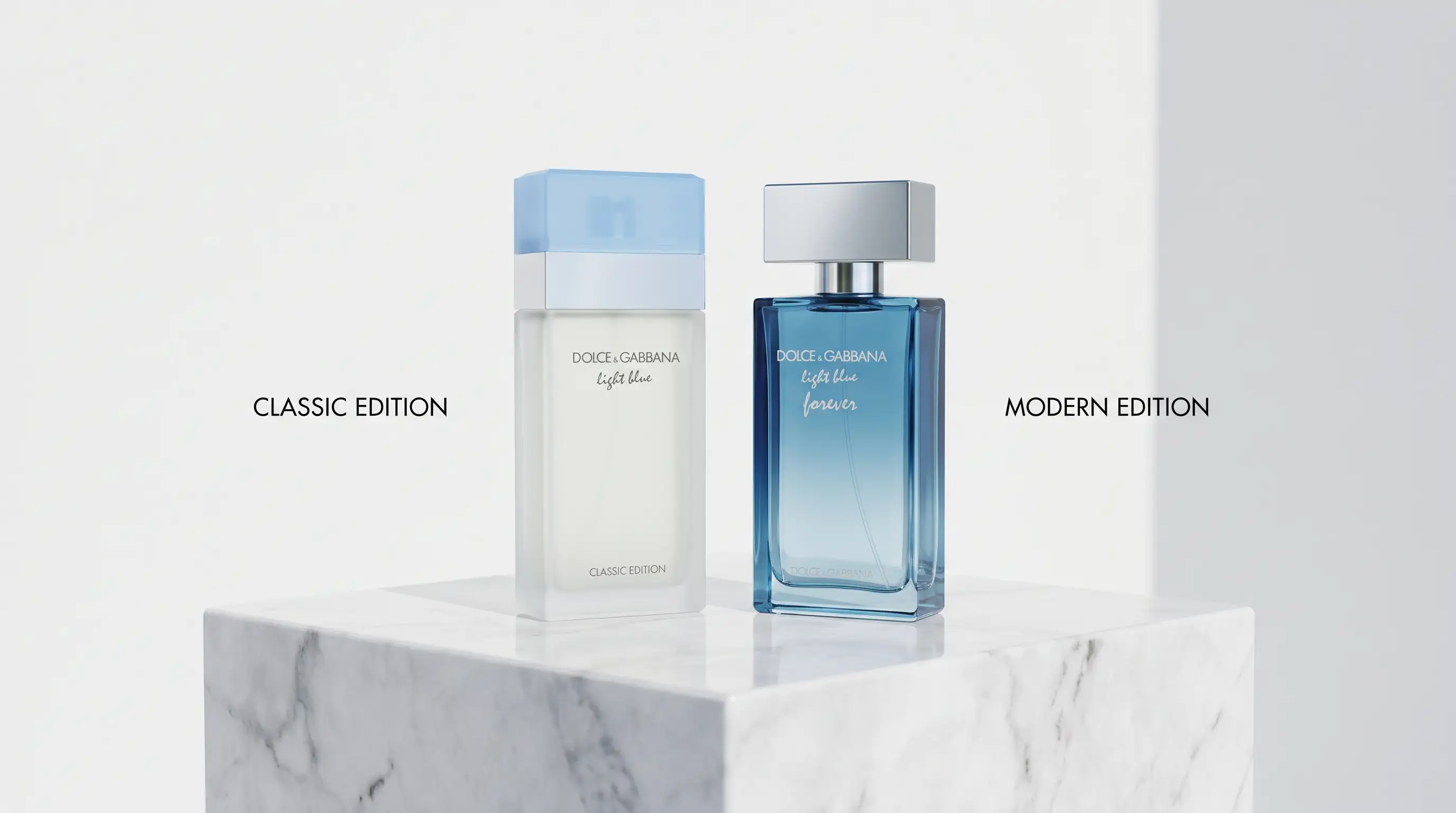
This is the part that matters most if you're buying based on an old memory. The Light Blue sold today under the same name is not identical to the 2001 original — and Dolce & Gabbana doesn't hide this so much as market it as an upgrade. Current Eau de Toilette bottles carry marketing language promising up to 16 hours of wear, built around the same Sicilian lemon top note but using different underlying fixative technology than the original formula. That almost certainly means a heavier reliance on Ambroxan-family materials to stretch a citrus-led composition across a full day, which changes the character of the dry-down even while the opening stays recognizable.
It goes further with the newest addition to the line. The 2026 Light Blue Eau de Parfum shifts the top notes toward Sicilian lemon, Calabrian bergamot, and pink pepper, with a heart of frangipani, marigold, and cinnamon over an amberwood and benzoin base. Long-time wearers on fragrance forums have been blunt about this one — many describe it as a noticeably more masculine, cinnamon-forward fragrance that shares little beyond the name and the frosted bottle shape with the original. If you're buying based on nostalgia for the 2001 scent, the Eau de Parfum is not that fragrance, and it's worth knowing that before you buy.
Who Should Wear Light Blue
This isn't a fragrance built to command a room, and it isn't trying to be. It's intimate, citrus-bright, and close to the skin — the opposite of a dense, long-lasting oriental or amber composition. That makes it a strong daytime option: office wear, warm-weather errands, anywhere you want to read as clean and effortless rather than heavy or deliberate.
It also tends to age well with the wearer rather than aging out. Plenty of people who wore it in their twenties and set it aside come back to it a decade or two later and find it reads differently — quieter, more familiar, without the youthful sharpness they remembered — which is a rare thing for a mass-market fragrance to pull off.
Good fit if: you want a reliable warm-weather citrus-floral, you like fragrances that read clean rather than complex, or you're looking for a daytime companion scent to pair with a heavier evening fragrance.
Skip it if: you want strong all-day projection without reapplying, you're looking for something distinctive rather than a familiar classic, or you specifically want the 2001-style composition (in which case, stick to the original Eau de Toilette, not the newer Eau de Parfum).
Pricing Across the US, UK, and Canada
Light Blue sells through both prestige department stores and discount fragrance retailers at the same time, which creates one of the widest price spreads of any designer fragrance on the market. The ranges below reflect both channels.
Size | USA (USD) | UK (GBP) | Canada (CAD) |
|---|---|---|---|
30ml / 1 oz | $50 – $65 | £42 – £55 | $70 – $90 |
50ml / 1.7 oz | $70 – $95 (discount ~$45–$55) | £62 – £80 (discount ~£38–£48) | $95 – $130 (discount ~$65–$80) |
100ml / 3.3–3.4 oz | $98 – $105 official; discount ~$60–$70 | £85 – £95 official; discount ~£55–£65 | $135 – $145 official; discount ~$90–$105 |
200ml / 6.7 oz | ~$140 – $150 (official value size) | ~£115 – £130 | ~$190 – $210 |
The men's Light Blue Pour Homme line follows a similar split: the 125ml Eau de Toilette lists close to $166 officially but is routinely available for $50–$70 through discount outlets, while the richer Eau Intense concentration in 100ml typically runs around $75 through the same discount channels versus a much higher department-store price.
As with most designer fragrances, the 100ml bottle offers noticeably better value per millilitre than the smaller sizes — it remains the line's best-selling format for that reason.
Prices reflect typical listings as of mid-2026 and vary by retailer — check current listings before buying.
Comparisons and Alternatives
Light Blue sits in a crowded, heavily imitated category: the bright citrus-floral built for warmth and daylight wear.
Versace Bright Crystal — the comparison that comes up most often. It opens on yuzu and pomegranate rather than lemon and apple, resolving into peony and magnolia instead of jasmine and bamboo. Most people who've worn both agree Light Blue is the livelier, more citrus-forward of the two, while Bright Crystal reads slightly more refined and evening-adaptable.
Chanel Chance Eau Fraîche — a more polished, quietly expensive-smelling take on the same fresh-citrus-floral idea.
Bvlgari Omnia Crystalline — leans further into bamboo and lotus for a cooler, more mineral freshness than Light Blue's fruitier warmth.
Issey Miyake L'Eau d'Issey — the aquatic-floral ancestor this entire genre draws from; a touch more watery, a touch less citrus-sharp.
Moschino Cheap & Chic I Love Love — frequently cited as the closest budget match to Light Blue's specific citrus-cedar-musk profile, for a similar mood at a fraction of the price.
For the men's line, Dossier's Citrus Marine is the most commonly cited affordable parallel to Light Blue Pour Homme, sharing its grapefruit-mandarin opening, though without the same incense-oakmoss depth in the base.
The Final Word
Light Blue earned a formal induction into the Fragrance Foundation's Hall of Fame in 2016, and it's stayed in continuous production for a quarter-century without ever really fading from relevance. That's not because it's complex — it deliberately isn't — but because it captured a specific, sun-warmed idea of the Mediterranean clearly enough that it never needed to explain itself. If you want that original clarity, look for the classic-style Eau de Toilette rather than the newer Eau de Parfum, which by most wearers' accounts is a genuinely different fragrance wearing a familiar bottle. Either way, it's built to be worn as an invitation rather than a declaration — light, citrus-bright, and easy.
Does Light Blue still smell the same as the original 2001 version?
Not exactly. The current Eau de Toilette uses updated fixative technology to extend wear time, which changes the dry-down even though the lemon-forward opening stays recognizable. The 2026 Eau de Parfum flanker is a more significant departure, built around a cinnamon-forward profile that many long-time wearers say barely resembles the original.
Why did my new bottle smell different from the one I remember?
This is a common and legitimate complaint, not just nostalgia. Reformulations to meet updated safety and longevity standards have shifted the composition over time, particularly in how the base notes are built.
Is Light Blue Eau de Parfum the same fragrance as Light Blue Eau de Toilette?
No — despite the shared name and similar bottle design, the 2026 Eau de Parfum uses a different note structure (bergamot, pink pepper, frangipani, cinnamon) and reads as noticeably more masculine and spice-forward than the original citrus-floral.