Most people treat deodorant and perfume like two points on the same scale — deodorant is just the cheap, everyday version, and perfume is the fancy upgrade you save for special occasions. That assumption is wrong in a way that actually matters. These aren't two versions of the same idea. In the US, one of them is legally classified as a drug. The other is a cosmetic with almost no regulatory restrictions on what it can contain. Once you understand that split, a lot of confusing advice about layering, longevity, and why your perfume never smells quite like it did at the counter starts to make sense.
The Legal Divide Almost Nobody Explains
Here's the part that never shows up in typical "deo vs perfume" articles: in the United States, antiperspirant isn't classified as a cosmetic at all — it's regulated as an over-the-counter drug. The FDA treats it this way because its actual job is to physically interfere with a bodily function — specifically, blocking the eccrine sweat glands so you sweat less. Under federal law, the moment a product is intended to treat, prevent, or alter something the body does naturally (rather than just cleaning or beautifying it), it crosses into drug territory.
That's why antiperspirants are only allowed to use a short, tightly controlled list of active ingredients — aluminum chloride, aluminum chlorohydrate, and various aluminum-zirconium compounds — at concentration limits the FDA has set between roughly 15% and 25%, depending on the compound.
Perfume sits on the completely opposite side of that line. Along with plain deodorants that simply mask odor without touching your sweat glands, perfume is regulated purely as a cosmetic — a product meant to cleanse, beautify, or make you more attractive, with none of the premarket approval or active-ingredient restrictions that apply to drugs. That's the real reason a bottle of pure oud or a niche extrait can legally contain almost any aromatic material a perfumer wants to use, while a stick of antiperspirant is capped by a government-set percentage of a single class of ingredient.
It's also worth noting, since the topic comes up constantly online: the long-running fear linking antiperspirant to breast cancer has been studied extensively by major health bodies, and none have found evidence to support it. The unease people feel probably comes from something true, though — antiperspirant genuinely does something to your body's function. Perfume never does. It sits on top of your skin; it doesn't ask anything of your physiology.
Why One Fades in Hours and the Other Can Last All Day
The second piece almost nobody explains clearly is why these products behave so differently over time.
Deodorant's fragrance is deliberately shallow. Its only job is to intervene during the hours before bacteria on your skin start breaking sweat down into odor-causing compounds — a process that kicks in within hours of application. That's exactly why deodorant needs reapplying daily, sometimes twice, while a well-made perfume doesn't. It was never designed to develop or change over time. It's built to step in, then get out of the way.
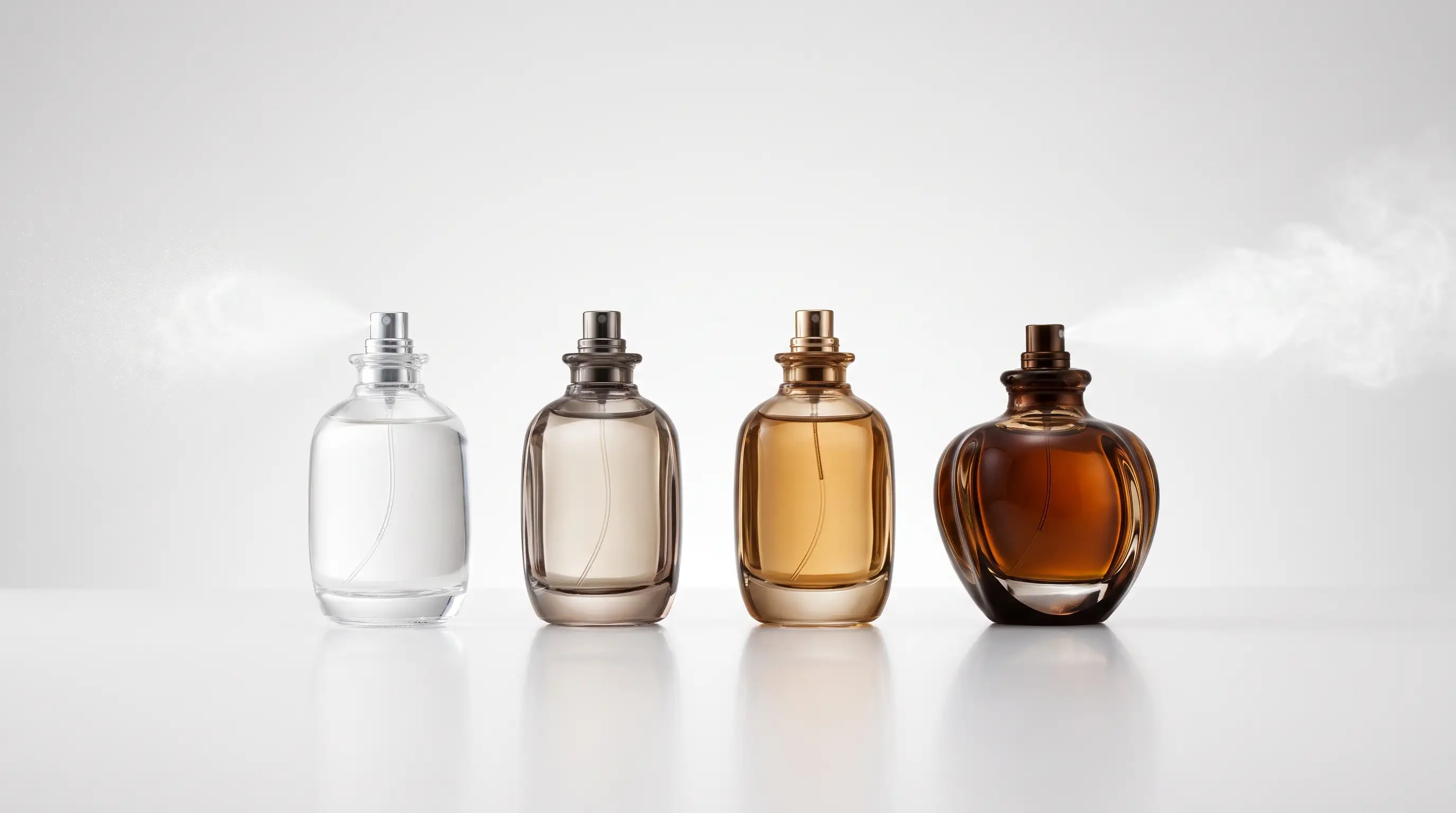
Perfume works on a completely different timeline, based on fragrance oil concentration:
Eau de Cologne: roughly 2–4% fragrance oil
Eau de Toilette: roughly 5–15%
Eau de Parfum: roughly 15–20%
Parfum / Extrait de Parfum: roughly 20–40%, with correspondingly less alcohol
Here's the counterintuitive part: a lighter Eau de Toilette often projects further into a room than a rich Parfum, because its higher alcohol content pushes fragrance molecules into the air more forcefully. Parfum, with very little alcohol, stays close to the skin instead — what perfumers call a "skin scent," noticeable only to someone standing near you. That's not a weakness of Parfum. It's the entire point of it.
Attars and pure oud oils — alcohol-free, blended into a carrier like sandalwood or jojoba oil and applied by dabbing rather than spraying — actually behave more like Parfum than like a typical Western Eau de Toilette. They stay close to the skin and unfold slowly with body warmth rather than announcing themselves across a room. It's a reminder that the oldest form of perfumery and the most concentrated modern formats are, in practice, working on the same underlying principle.
Which One Do You Actually Need?
The honest answer is that this usually isn't a choice between two rivals — it's two different obligations. Deodorant isn't optional in any climate; it's baseline hygiene, regardless of what else you're wearing. Perfume is never required in the same way. It's chosen, which is exactly why it carries meaning deodorant doesn't — nobody remembers a person by their deodorant, but plenty of people can name the exact perfume someone close to them always wore.
A Common Mistake: Layering Fragrance on Top of Fragrance
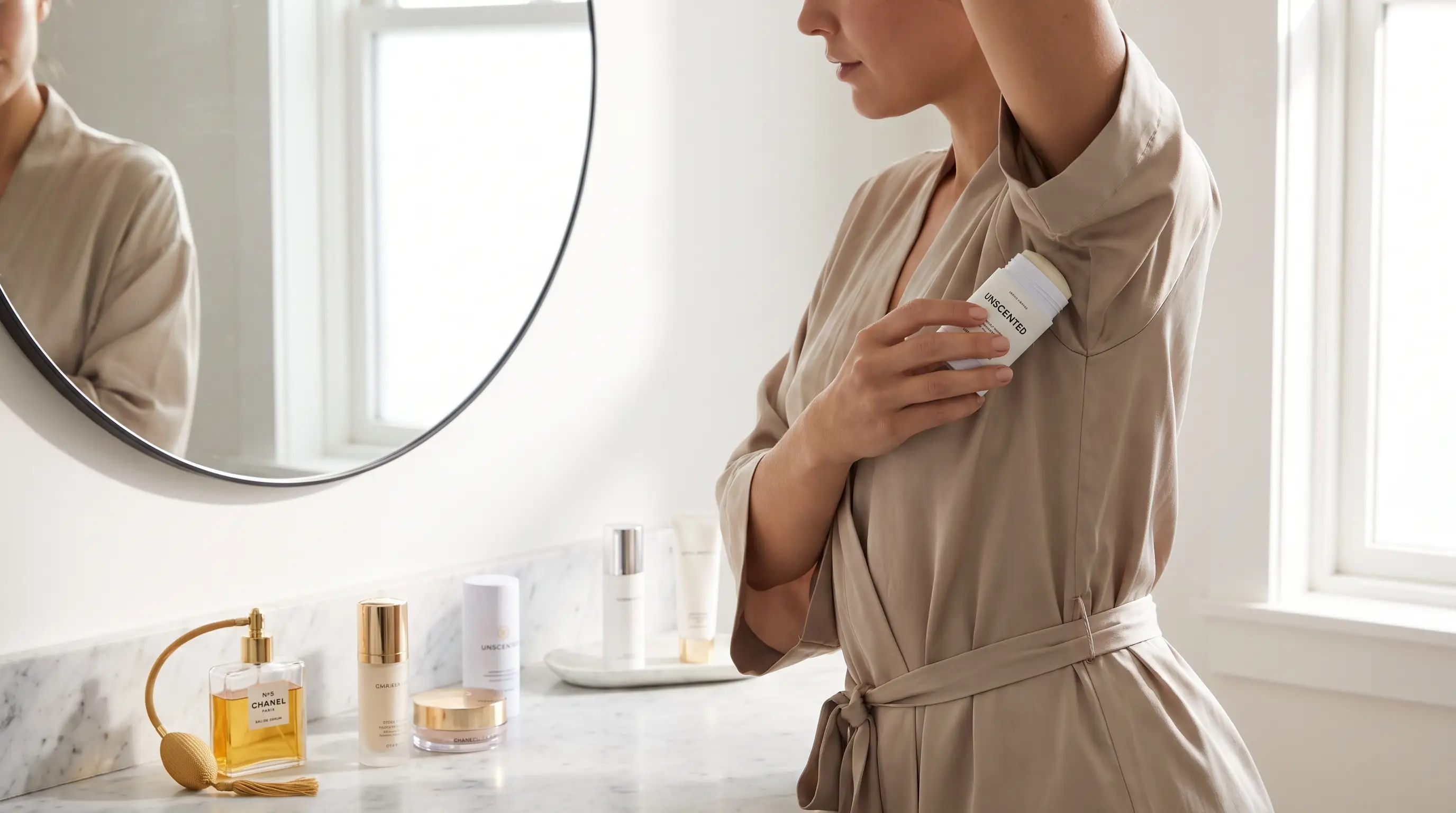
If you've ever wondered why an expensive fragrance never smells quite like it did on the sales counter, the answer is often sitting under your arms. A heavily scented deodorant applied underneath competes with whatever you spray on top, muddying both. Antiperspirants are actually formulated with weaker fragrance for exactly this reason — so they don't fight with whatever perfume goes over them. The simple fix: use an unscented or barely-scented antiperspirant as your hygiene foundation, and save all your fragrance intent for the perfume layered above it.
Price Comparison Across the US, UK, and Canada
Deodorant and perfume are sold by completely different logics — one as a fast-turnover daily staple, the other as an occasional or luxury purchase — so their pricing structures don't look anything alike.
Deodorant / Antiperspirant
Format & Size | USA (USD) | UK (GBP) | Canada (CAD) |
|---|---|---|---|
Roll-on, ~50ml | $3 – $7 | £2 – £5 | $4 – $9 |
Stick, ~65–75g | $4 – $8 (clinical-strength up to $13–$20) | £3 – £6 (clinical £8–£12) | $5 – $10 |
Aerosol spray, ~150–200ml | $5 – $9 | £3 – £6 | $6 – $11 |
Even premium formulas rarely exceed roughly $13–$20 per unit, and mainstream US brands like Dove and Old Spice average closer to $7–$8 at standard retail.
Perfume (Standard Designer Tier)
Size | USA (USD) | UK (GBP) | Canada (CAD) |
|---|---|---|---|
50ml | $60 – $100 | £50 – £85 | $80 – $135 |
100ml | $85 – $150 | £70 – £120 | $115 – $200 |
200ml | $130 – $220 | £110 – £180 | $175 – $290 |
Pure attar and oud oils sold by dedicated Middle Eastern perfume houses don't follow this pattern at all — they're priced by gram and by the rarity of the ingredients used, and a genuinely rare oud oil can cost more than an entire shelf of designer Eau de Parfum.
Prices reflect typical listings as of mid-2026 and vary by brand and retailer.
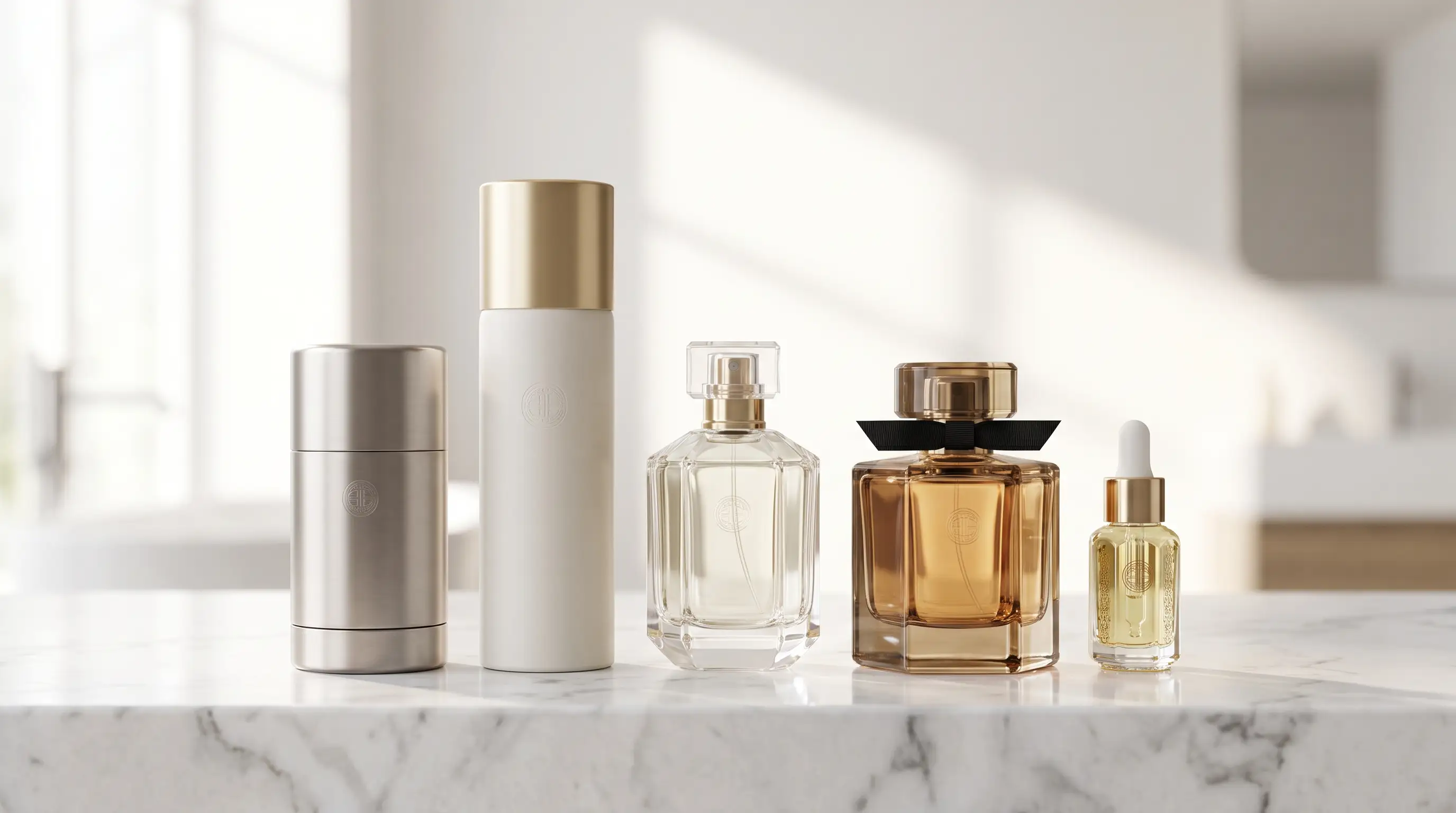
Quick Reference: The Full Spectrum
Antiperspirant — legally a drug; its only job is to physically stop sweat glands from producing sweat.
Deodorant (non-antiperspirant) — a cosmetic that masks odor without touching the sweat glands; the middle ground between hygiene and scent.
Eau de Cologne / Eau de Toilette — light, alcohol-forward, fast to project and fast to fade.
Eau de Parfum / Parfum — concentrated, slower to reveal itself, stays closer to the skin.
Attar / Oud Oil — alcohol-free, dabbed rather than sprayed, the most intimate and longest-standing format of all.
The Final Word
Deodorant and perfume aren't competing products — they're two separate jobs, best worn in sequence rather than compared against each other. Deodorant is the quiet, non-negotiable discipline of hygiene. Perfume is the deliberate, optional signature layered on top of it. One answers to a government drug monograph; the other answers only to your own taste. Get the order right — unscented protection underneath, chosen fragrance above — and you'll get more out of every bottle in your collection.
Is deodorant just a weaker version of perfume?
No. Deodorant (and especially antiperspirant) serves a functional, often legally regulated purpose — masking odor or blocking sweat — while perfume exists purely for scent and self-expression, with a completely different regulatory classification in the US.
Why is antiperspirant considered a drug but deodorant isn't?
Antiperspirant physically blocks sweat glands, which counts as altering a bodily function under US law — the legal definition of a drug. Plain deodorant only masks odor on the skin's surface without affecting sweat production, so it's classified as a cosmetic, the same category as perfume.
Should I wear scented deodorant and perfume together?
It's better not to layer two strong scents. A heavily fragranced deodorant will compete with your perfume and muddy both. Using an unscented or lightly scented antiperspirant as a base, with your perfume as the only real fragrance layer, gives the truest performance from your bottle.